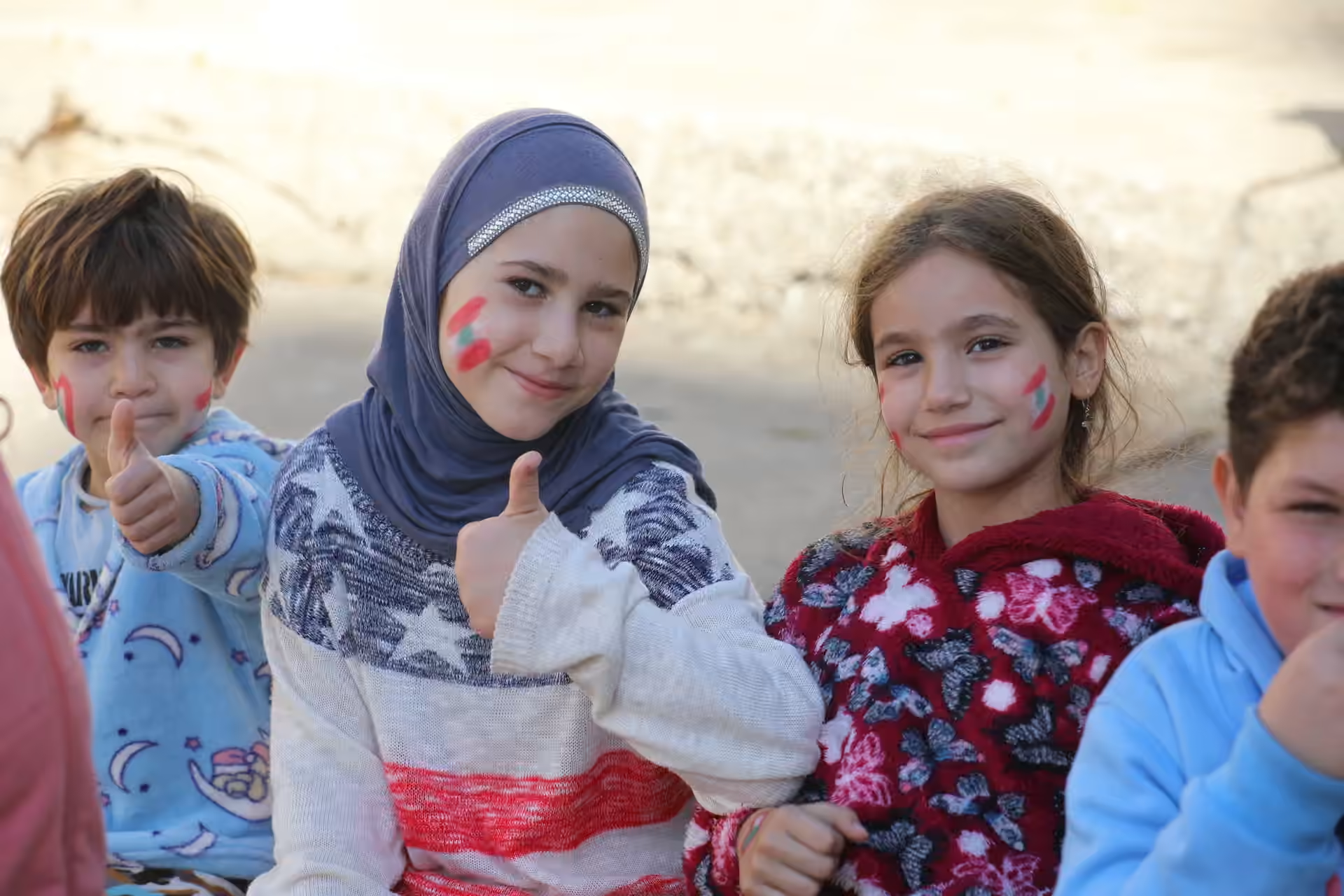
Child Development & Family Support
Children recover through safe relationships.
Program detail on how EMERGE supports children and the caregivers, teachers, and communities around them.
Purpose
EMERGE strengthens the protective environment around children affected by crisis through safe spaces, child-focused psychosocial support, caregiver strengthening, child protection awareness, referral, and practical support where available.
The challenge
Children affected by displacement, poverty, violence, bereavement, family separation, disability-related barriers, or prolonged instability may lose safety, routine, learning, play, trusted relationships, and a sense of belonging. Caregivers may also be carrying grief, trauma, economic pressure, or family stress. When adults are overwhelmed, children's distress can be misunderstood as disobedience, silence, aggression, withdrawal, or learning difficulty. Support must therefore include children and the adults around them.
Focus of support
- — Safe and nurturing spaces where children can play, learn, express, build friendships, and regain routine.
- — Child-focused psychosocial support that helps children name feelings, strengthen coping, and reconnect safely.
- — Caregiver and family strengthening for parents, grandparents, foster carers, kinship carers, teachers, and facilitators.
- — Child protection awareness and referral for children and families facing heightened risk.
- — Community capacity through training and tools for caregivers, teachers, churches, and local practitioners.
Goals
- — Help children feel safer and more supported.
- — Strengthen the adults around children.
- — Protect children from further harm through awareness, referral, and safeguarding.
- — Build protective environments that can continue beyond one activity or project cycle.
Who we serve
Children, adolescents, caregivers, teachers, displaced and refugee families, children with disabilities or developmental needs, and families affected by crisis, poverty, trauma, violence, grief, or social vulnerability.
Project examples
- Children at Risk Support. Structured support for children facing heightened risk due to displacement, violence, grief, exclusion, poverty, or loss of stable care.
- Safe and Nurturing Spaces. Supervised trauma-aware spaces in verified locations, facilitated by trained adults and linked to follow-up.
- Caregiver and Family Strengthening. Sessions and follow-up helping caregivers understand children's distress and respond safely.
- Orphaned and Vulnerable Child Support. Education continuity, psychosocial support, caregiver strengthening, and referral.
Keep exploring
Explore related programmes
Programme
Crisis Response & Protection
Rapid, protection-sensitive support for refugees and displaced families.
Learn moreProgramme
Mental Health & Psychosocial Support
Arabic-language counselling and trauma-informed group care.
Learn moreProgramme
Economic Recovery & Stability
Livelihoods and stability pathways for families rebuilding after crisis.
Learn more