Stories From the Field
Stories from the field.
Real stories of safety, care, and recovery.
Across MENA, people are finding support through trusted local pathways, Arabic language care, child and family support, training, emergency response, and practical help.
These stories are shared only with consent and with details adjusted when needed to protect privacy and safety. They show real change without reducing people to what happened to them.
Feature Story 01
Strength after loss
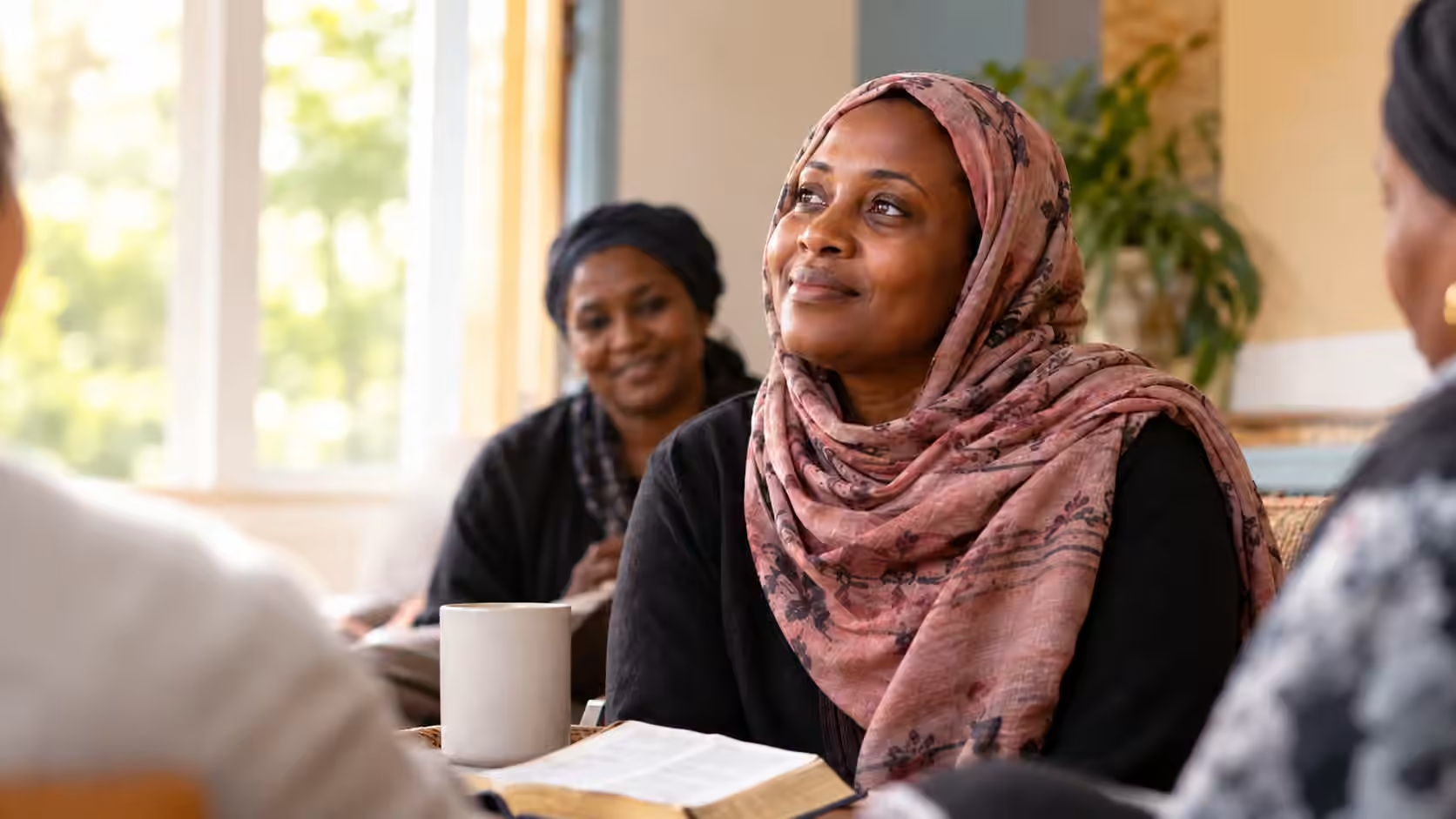
After fleeing Sudan and grieving the death of her husband, Naama found a safe Christian trauma healing group where grief, faith, and hope could be held together.
Image caption: Naama's name and identifying details have been changed for privacy and safety. Her story is shared with consent.
Naama reached Egypt after fleeing Sudan, but grief came with her. She was a young mother carrying sudden loss, painful memories, and questions she could not easily speak aloud.
Carrying grief without carrying it alone
In the early months after her loss, Naama withdrew from people. She struggled with guilt, anger, shame, fear, and deep sadness. She needed support that was gentle, trauma informed, and sensitive to her Christian faith.
Through a trusted connection, Naama joined a Christian trauma healing group. The group did not rush her grief or ask her to pretend everything was fine. It gave her space to name pain, understand trauma reactions, and hear that suffering was not weakness or spiritual failure.
A different way to understand guilt
One of the most important changes came as Naama began to understand that she was not responsible for her husband's death. Other women in the group also spoke about carrying guilt for things outside their control.
The loss remained real. But false guilt began to loosen its hold.
Strength for today
Over time, Naama became more able to manage strong emotions, communicate with her son, care for herself, and reconnect with others. Her faith also became a place where she could bring grief honestly, rather than hide it.
Naama's grief has not disappeared. But she is no longer carrying it alone. Through safe support, Christian community, and trauma informed care, she has begun to find strength after loss.
Feature Story 02
When healing opened a new door
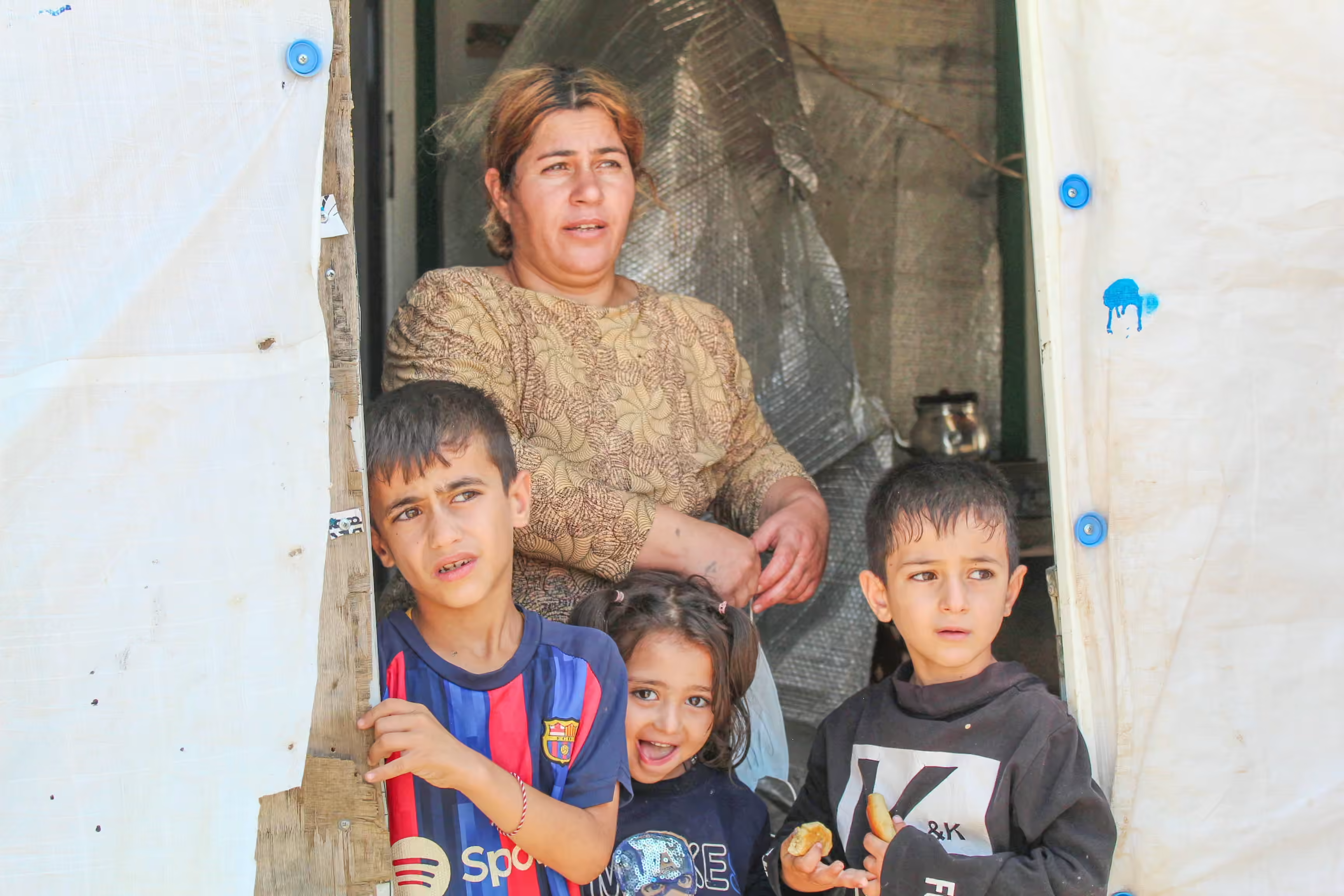
A women's ministry leader in Egypt came to a training to help others, then found deeper healing through the Online Counseling Center.
Image caption: Ibtisam's name and identifying details have been changed for privacy and safety. Her story is shared with consent.
Ibtisam lives in Egypt, where she serves women, widows, and families through church ministry. For years, she was known as calm, gentle, and smiling. Inside, she was confused by sudden reactions that did not feel like her, moments when pain came out as sharp words, silence, withdrawal, or deep sadness.
From training to deeper professional care
Ibtisam attended a training in Egypt with 37 other leaders, social workers, and community servants. They came to learn how to serve others better. As the teaching explored trauma and hidden wounds, it also touched needs some participants were carrying quietly.
After speaking with the team, Ibtisam was referred to the Online Counseling Center, where she began professional counselling. The training helped her recognize the pain. The Online Counseling Center gave her a safe pathway to begin working through it.
Healing that changed her service
Through online counselling, Ibtisam began to understand herself with compassion. She learned to name her feelings, write honestly, speak with God from her true self, and share with safe people.
She also discovered that boundaries do not contradict love. Forgiveness did not mean returning to harmful closeness. God valued her life, and she could protect herself without losing her faith or compassion.
As Ibtisam healed, her ministry changed. Before, she said she listened to women's pain disconnected from her own feelings. Now, she can sit with women and girls in pain with real empathy.
Feature Story 03
Carrying hope for the children
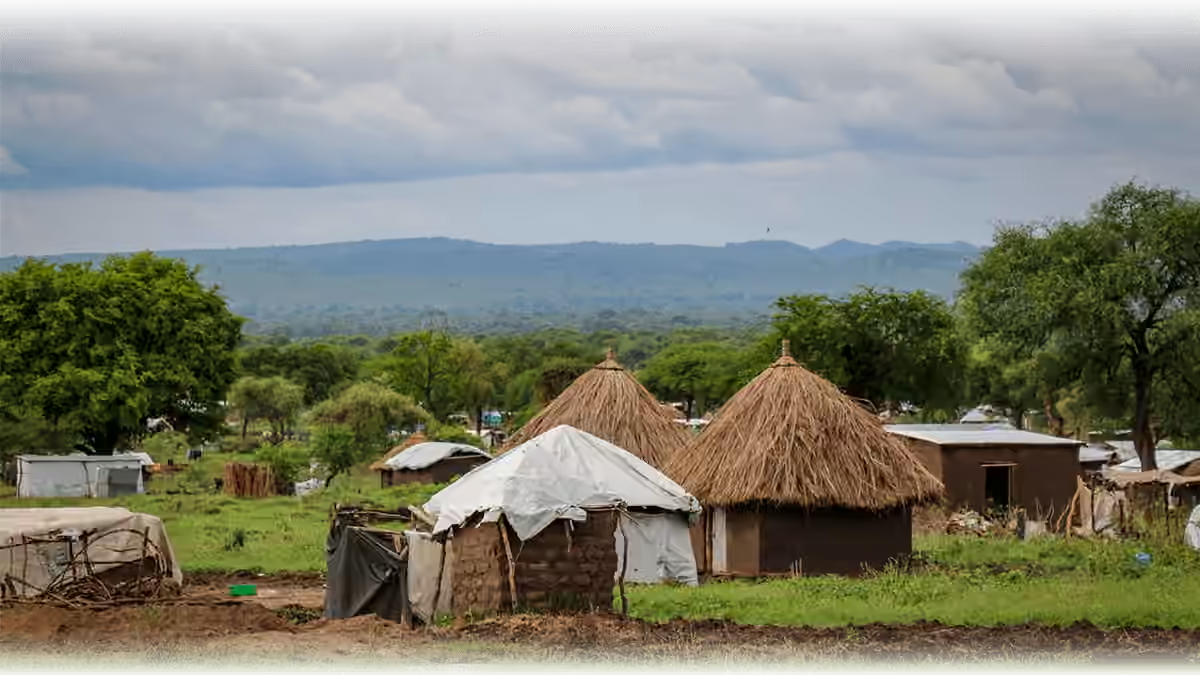
After fleeing Sudan and losing their sister on the journey, Refqa and Eman began caring for her children in Egypt with support from the Sudan Emergency Response and local partners.
Image caption: Refqa and Eman's names and identifying details have been changed for privacy and safety. Their story is shared with consent.
When conflict reached their area in Sudan, Refqa, Eman, and their family fled toward Egypt. The journey was marked by fear, uncertainty, and loss. Their sister died during the journey, leaving behind two young children who now needed care, stability, and answers no child should have to carry alone.
Help at the right moment
Through the Sudan Emergency Response and local partners, the family received practical support at a time when pressure was high. This included food assistance and cash support where verified, helping them meet urgent needs with more dignity and choice.
Alongside practical help, local partners offered emotional support, listening to the sisters, giving them space to speak, and helping them know they were not facing everything alone.
Not alone
Support at the right moment cannot erase loss. But it can help a family breathe, make urgent decisions, and feel seen during a frightening season.
Through the Sudan Emergency Response, local partners are standing with families affected by conflict, displacement, and grief, offering practical care, compassion, and hope.
Feature Story 04
Rebuilding for her son
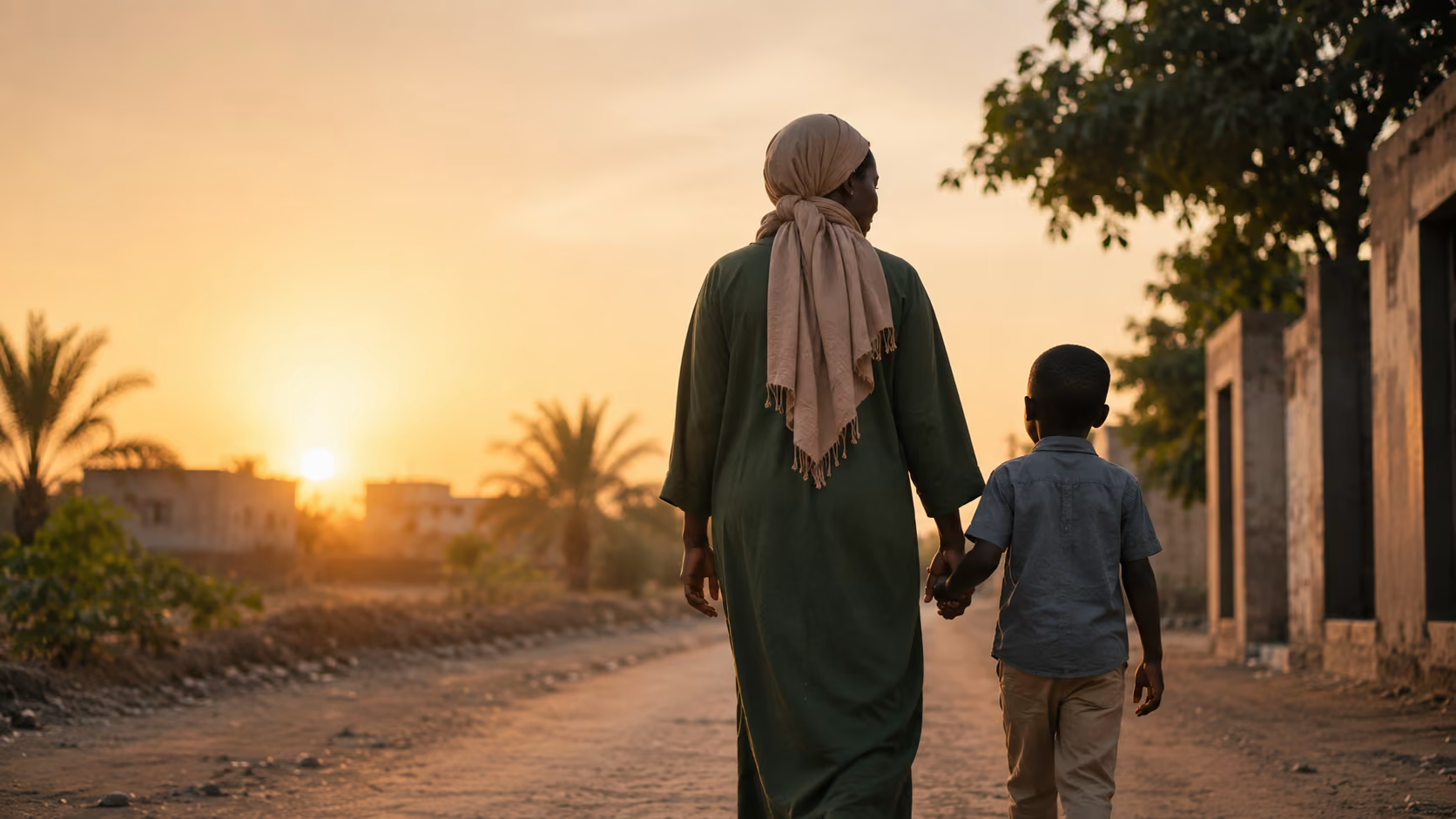
Widowed and displaced from Sudan, Akoj was raising her young son alone in Egypt when an EMERGE trauma healing group gave her somewhere to put down the weight she had been carrying for both of them.
Image caption: Akoj’s name and identifying details have been changed for privacy and safety. Her story is shared with consent.
Akoj was 27 when she arrived in Egypt with her young son. There was no more fighting to survive day to day, but there was also no relief — just a widow, still grieving, now solely responsible for a child who needed her to hold things together.
For a long time, she tried to keep functioning without dealing with any of it. The grief, the anger at how her husband died, the guilt she couldn't explain, the fear of raising her son without him — she pushed it all down because there didn't seem to be room to feel it.
A mother first, a grieving widow second
Akoj's days revolved around her son — school, meals, routine — which left little space to process what she herself was carrying. She described feeling "numb some days and furious on others," with no real outlet for either.
A local referral connected her to an EMERGE trauma healing group in Egypt, made up mostly of other displaced women. It was the first time since her husband's death that she had somewhere to bring her grief without also having to manage someone else's needs at the same time.
Setting down guilt that was never hers to carry
In the group, facilitators trained in trauma-informed, faith-sensitive care helped her separate what had actually been in her control from what hadn't. Hearing other women describe the same self-blame made it easier for Akoj to question her own.
She did not stop grieving her husband. But she stopped treating his death as something she had failed to prevent.
What changed at home
Akoj says the clearest change has been with her son — more patience, steadier reactions, fewer days spent distracted by grief she wasn't letting herself feel. She has also stayed connected to the women from her group, who check in with each other outside of sessions.
She is still a widow raising a child far from home. That has not changed. What has changed is that she is no longer doing it while also carrying grief she never had space to name.
Her story shows what becomes possible when trauma care is local, safe, structured, and compassionate: a grieving mother finds strength, a child receives a more present parent, and a family begins to rebuild hope after loss.
Help restore hope.
Feature Story 05
When care needs tools
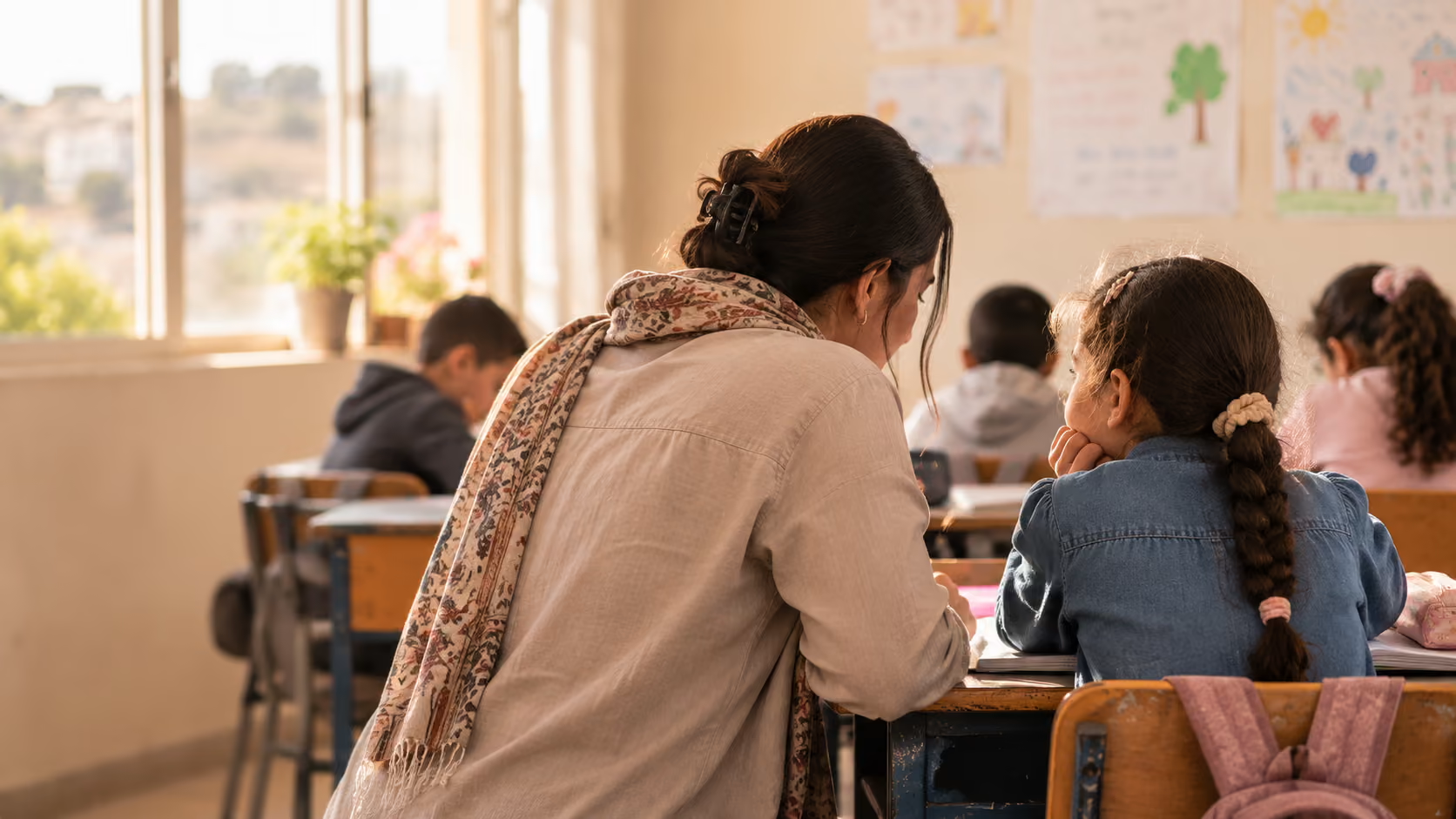
Rania knew many of her students in the West Bank were carrying trauma. What she needed was not more awareness of their pain — she needed practical tools to know how to respond without causing more harm.
Image caption: Rania’s name and identifying details have been changed for privacy and safety. Her story is shared with consent.
Rania cared deeply about her students. As a schoolteacher in the West Bank, she saw the weight many children were carrying. Some came to class anxious, withdrawn, angry, distracted, or easily overwhelmed. Others struggled to follow instructions, stay focused, or trust the adults around them.
She knew these children were not simply “bad students.” She knew trauma was affecting them. But knowing a child is hurting is not the same as knowing how to help.
When compassion is not enough
Rania wanted to respond with patience and care, but she often felt unsure. Should she correct the behavior? Should she give space? Should she ask questions? Should she set a boundary? How could she keep the classroom safe without adding more shame or fear?
Like many teachers and caregivers, Rania had a heart to help but needed guidance. Without the right tools, even caring adults can unintentionally react in ways that deepen a child’s pain. A harsh word, a rushed correction, or a misunderstood response can make a traumatized child feel more unsafe, more alone, or more ashamed.
Rania did not want that. She wanted to become a safer adult for the children in her care.
Training that changes the response
Through EMERGE’s trauma-informed training, Rania gained practical tools for working with traumatized students. She learned how trauma affects behavior, attention, emotions, trust, and relationships. She learned how to listen without rushing, set healthy boundaries, respond calmly, and create emotional safety in the classroom.
The training helped her move from fear of “doing the wrong thing” to greater confidence in responding with wisdom.
She learned that trauma-informed care does not mean ignoring difficult behavior. It means responding to behavior in a way that protects dignity, reduces harm, and helps the child feel safe enough to learn, connect, and grow.
A safer classroom and community
Today, Rania supports students and church members with greater safety, dignity, and understanding. When a child reacts out of fear or overwhelm, she is better equipped to pause, listen, guide, and respond with care.
Her training is now protecting more than one classroom. It is shaping the way children and families are treated in her wider community.
Rania’s story shows the value of equipping caregivers who are already close to the pain. EMERGE does not replace local teachers, caregivers, or community leaders. It strengthens them with trauma-informed tools so they can become safer sources of support where they already live and serve.
Because when one teacher is trained, many wounded children can be met with care instead of confusion, dignity instead of shame, and safety instead of harm.
Help train more caregivers like Rania.